Three weeks before a scheduled closing, a buyer's loan officer calls with a question nobody raised at the showing: can you produce the recorded maintenance agreement for the road?
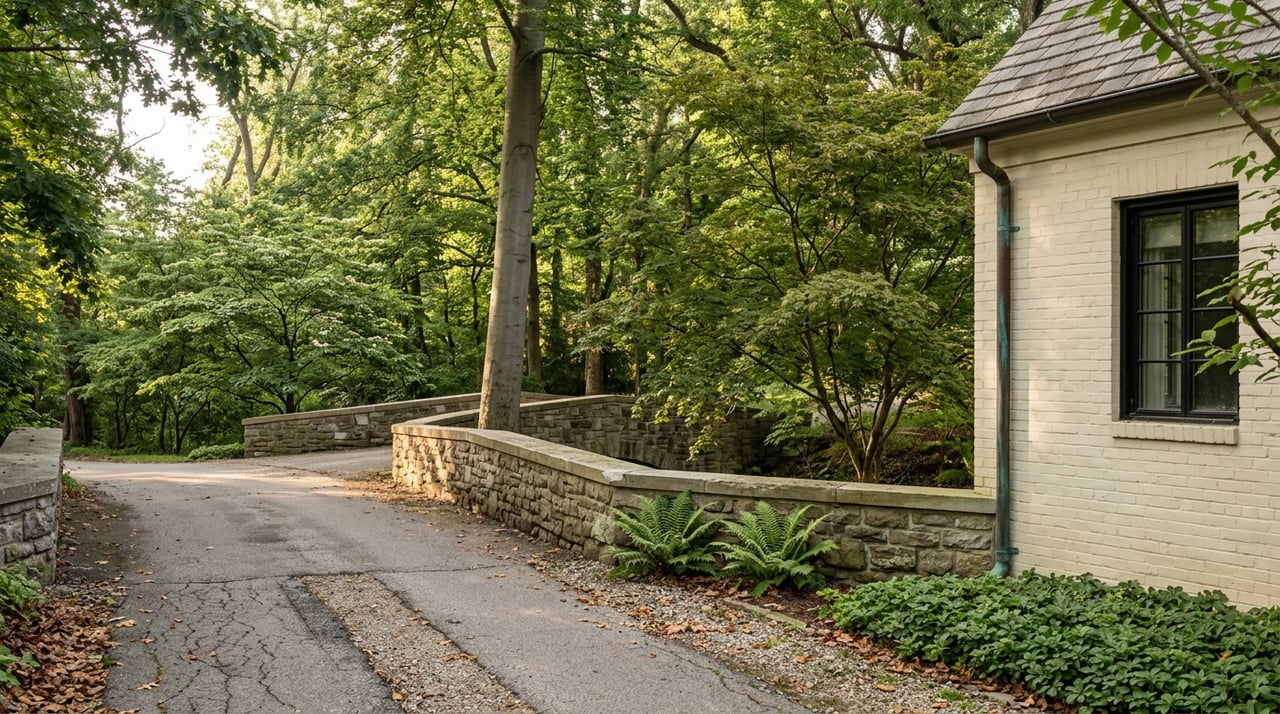
It is not a question most Louisville buyers ever hear, because most Louisville streets belong to the city or the county. Mockingbird Valley is different. This is one of the smallest incorporated cities in Jefferson County, and a third of its roads are privately owned rather than maintained by any public entity. That single fact, buried in the neighborhood's history rather than on any listing sheet, is the kind of detail that can add weeks to a closing timeline if it surfaces late instead of early.
The Roads Nobody Mentions at the Showing
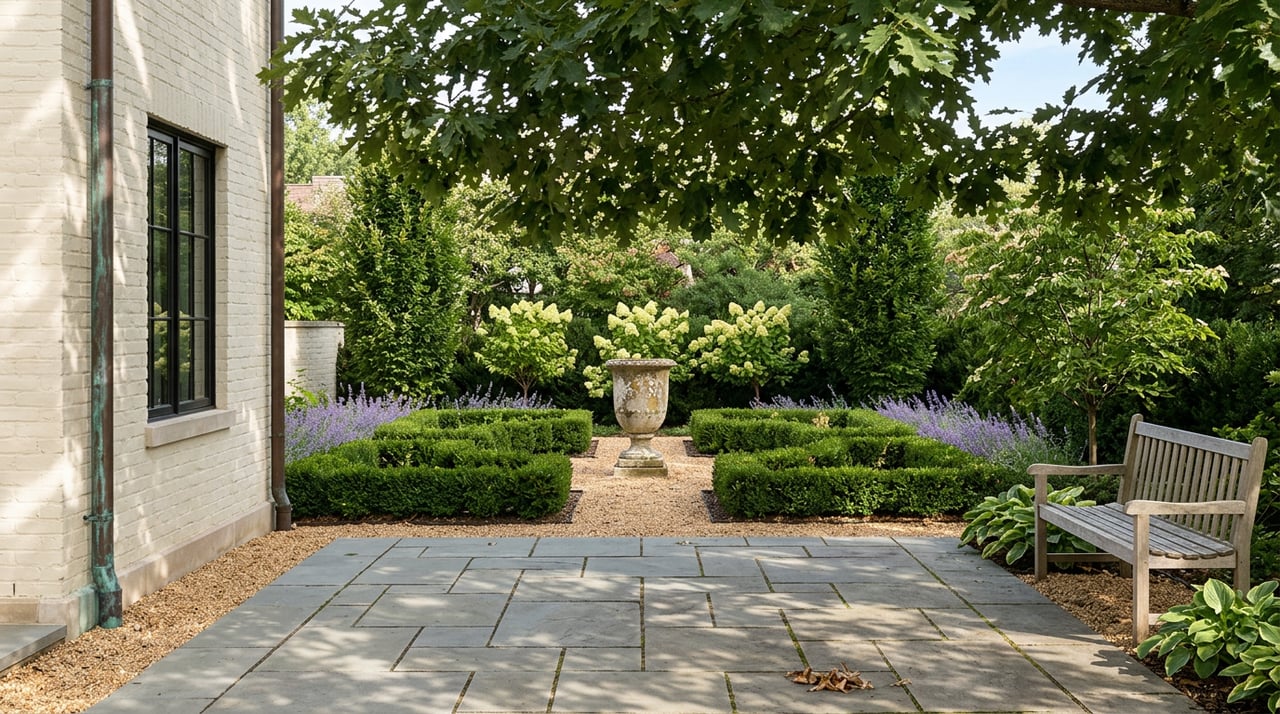
Mockingbird Valley has functioned as a home rule-class city since it incorporated in 1940. The entire city is zoned residential except for one small commercial parking lot, and roughly a third of its lanes and drives are privately owned. That arrangement grew out of how the place was built: narrow, deliberately unpaved-feeling roads laid out to preserve the country enclave feel rather than to serve as through streets for a growing subdivision.
For a homeowner who has lived on one of those roads for twenty years, the private ownership rarely comes up. For a buyer applying for a loan, it can become the single item that determines whether financing closes on schedule. Lenders often want to see a formal, recorded road maintenance agreement in place before they will fund a purchase on a private road. That agreement needs to specify who is responsible for repairs, how costs are split among the properties that share access, and what happens if one owner stops paying into it.
Kentucky's standard seller disclosure form does not cover this. State law requires sellers of single-family homes to complete the Seller's Disclosure of Property Condition form and deliver it to the buyer within 72 hours of receiving an offer to purchase, but that form is built around basement leaks, roof condition, and water and sewage systems. Road ownership structure is a title issue, not a condition issue, which means it will not appear on the disclosure form at all. A buyer has to ask for it directly and confirm it through the title report, and the general mechanics of private road agreements in Kentucky make clear that the absence of a written agreement, not just its terms, is what creates risk for a new owner stepping into a shared arrangement they did not negotiate.
Why the Median Price You Found Online Is Almost Meaningless
Search four different real estate portal pages for Mockingbird Valley and you will land on four different numbers. One site quotes a median built from a pair of condominiums put up in 1981 on Mockingbird Valley Road, a different housing stock entirely from the estate-scale homes the name usually conjures. Another cites a 2021 figure north of $870,000 for the single-family stock, now several years stale. A third folds in an active listing from Mockingbird Gardens, an adjacent but separate development, and lands somewhere in the mid five hundreds. None of these numbers are wrong exactly. They are measuring different things, or measuring the same small thing at different points in time, because there is not enough transaction volume in any given twelve-month window to produce one stable figure.
The scale of the place explains why. As of the 2020 census, Mockingbird Valley had 175 residents. The 2000 census counted 82 total housing units in the city. A market that small does not generate the transaction count needed to smooth out a median or calibrate an automated valuation the way a neighborhood with hundreds of annual sales can. The same statistical thinness shows up in the city's own population data: the 2023 American Community Survey estimate put the population at 122, down from 161 the year before, a swing of nearly a quarter of the total in a single year. That is not a neighborhood emptying out. It is what happens to any statistic when it is drawn from a sample this small. The same mechanism that makes the population estimate bounce around is the mechanism that makes the median home price bounce around too.
What Two Recent Sales Actually Show
The clearest way to see the problem is to look at what an appraiser or an automated valuation model actually has to work with. Two homes sold in Mockingbird Valley within the past year, and the gap between their sale prices and their automated estimates tells the real story.
| Address | Built | Square Feet | Sale Date | Actual Sale Price | Current Automated Estimate | Gap |
|---|---|---|---|---|---|---|
| 400 Mayfair Ln | 1929 | 6,383 | April 24, 2026 | approx. $2.75M ($431/SF) | $2,132,918 | model roughly 22% below the sale |
| 509 Brandon Rd | 1955 | 5,111 | August 26, 2025 | $1,240,000 ($243/SF, 7% below list, 32 days on market) | $1,253,051 | model within about 1% of the sale |
Look at what those two rows are actually saying. For one home, the automated estimate landed within a rounding error of the real sale price. For the other, built the same era but on a different street, the model missed by more than a fifth of the home's value. That is not a difference in home quality. It is a difference in how much reliable comparable data existed for each street when the algorithm ran its numbers. In a market with dozens of sales a year, an automated model has enough inputs to smooth over that kind of gap. In a market with a handful of sales a year, whether the model gets close or misses badly is closer to a coin flip than a calculation.
A neighborhood this small does not have enough sales to average away a bad comp. Every closing becomes a data point that the next appraisal will lean on, whether it deserves to or not.
The price-per-square-foot spread between those two homes, $431 versus $243, is nearly double. Part of that reflects genuine differences in finish level and lot position. Part of it reflects the fact that with only a handful of closed sales in any twelve-month stretch, there is no large enough pool of comparable transactions to pull the outliers toward a middle. Buyers and sellers who assume the "median" they found online represents a stable, current number are working from a figure that could be built on two sales from different years, different property types, or a development next door that is not Mockingbird Valley at all.
What This Means If You're Making an Offer or Setting a Price
For a buyer or seller who has already decided this is the neighborhood, the practical response is the same whether you are the one writing the offer or the one accepting it.
- Request the recorded road maintenance agreement, or confirmation that the home's access is on a public street, before earnest money goes hard. This is a title question, not a walk-through question, and it belongs in the same conversation as the survey and the title commitment.
- Ask for a manually adjusted comparative market analysis rather than trusting a portal's automated estimate. Given how far apart the two recent sales above landed from their own model estimates, an agent who pulls comparables by hand and adjusts for lot, era, and finish will get closer to a defensible number than any algorithm running on a two-sale sample.
- If you are the seller, gather your own documentation on the road agreement, if one exists, before listing. Finding out mid-contract that the paperwork is missing or out of date costs time that a thin-inventory market does not always give back, since another comparable listing may not appear again for months.
The Neighborhood Behind the Paperwork
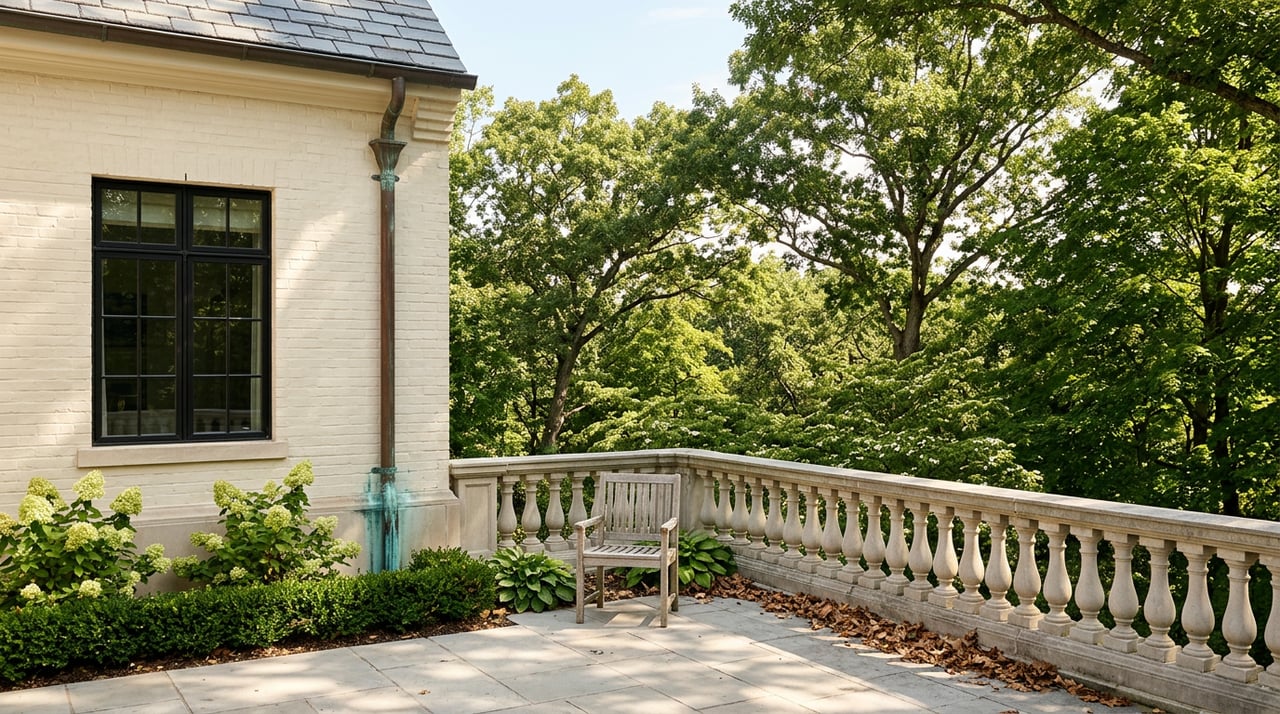
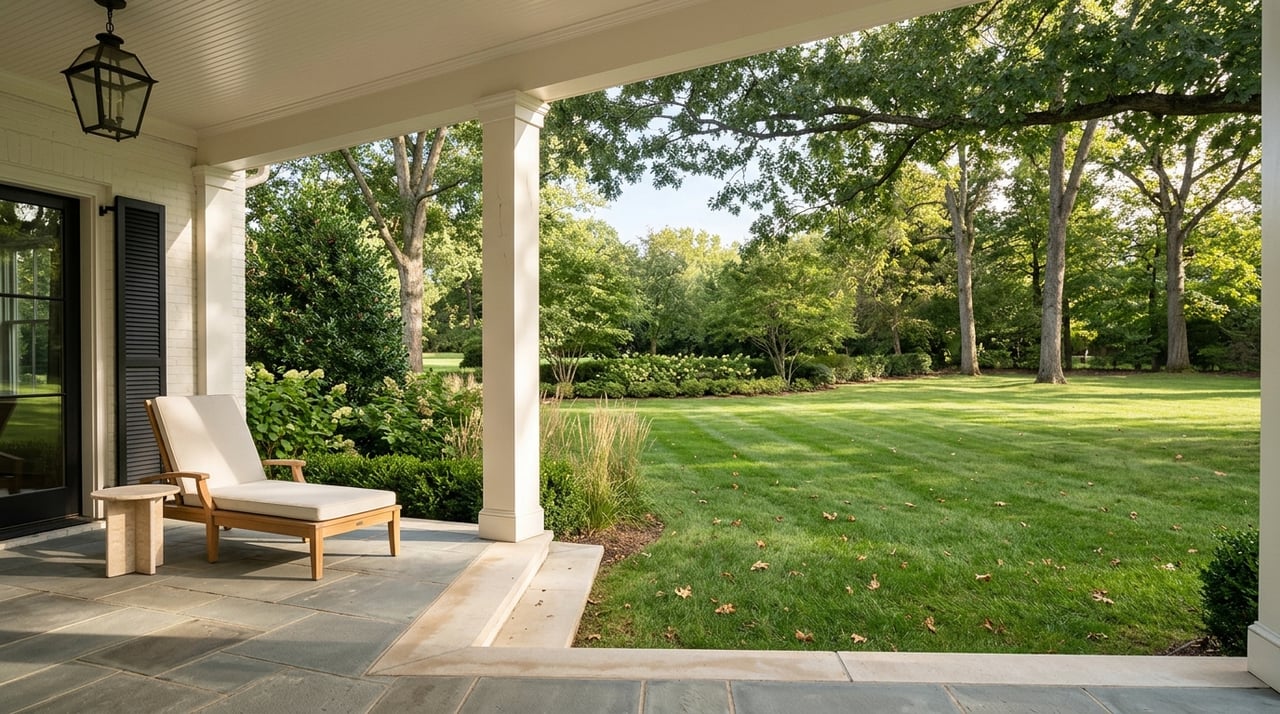
The thinness of this market is not an accident of recent slow sales. It is built into the place. A 450-acre section of Mockingbird Valley was listed on the National Register of Historic Places in 2006, with a neighborhood plan approved by Metro Council the following year. The deed restrictions and subdivision rules that guided the original 1920s development rejected the standard suburban growth pattern of the era in favor of deep setbacks and narrow lanes, the same low-density choices that keep the total housing count fixed today. The last new subdivision, Mockingbird Valley River Bluff, added only 15 lots across 54 acres when it was built out in 2006. Barring a change to those protections, the number of homes that can ever come to market here will not meaningfully grow, which means the comps problem described above is permanent rather than a temporary condition of a slow year.
That is also why the neighborhood rewards patience over speed. A buyer set on a specific street may wait a year or more for the right listing to appear. A seller who understands that the next closing becomes the next comp has good reason to get the road documentation and the pricing analysis right before the sign goes in the yard, rather than after an offer arrives and the clock starts running.
If you are weighing a purchase or a sale in Mockingbird Valley and want a pricing analysis built from real comparables rather than an automated estimate, or want to confirm road ownership and financing eligibility before you write an offer, the Stough Barlow Team works this market street by street. Contact us to talk through what a specific address will actually take to close.