A closing attorney pulls the title history on a home listed simply as "Indian Hills" and finds a decades-old deed that references Winding Falls instead. Nothing is wrong with the property. The buyer just found the seam where four once-separate cities were stitched into one, and most people never notice it until a document forces them to.
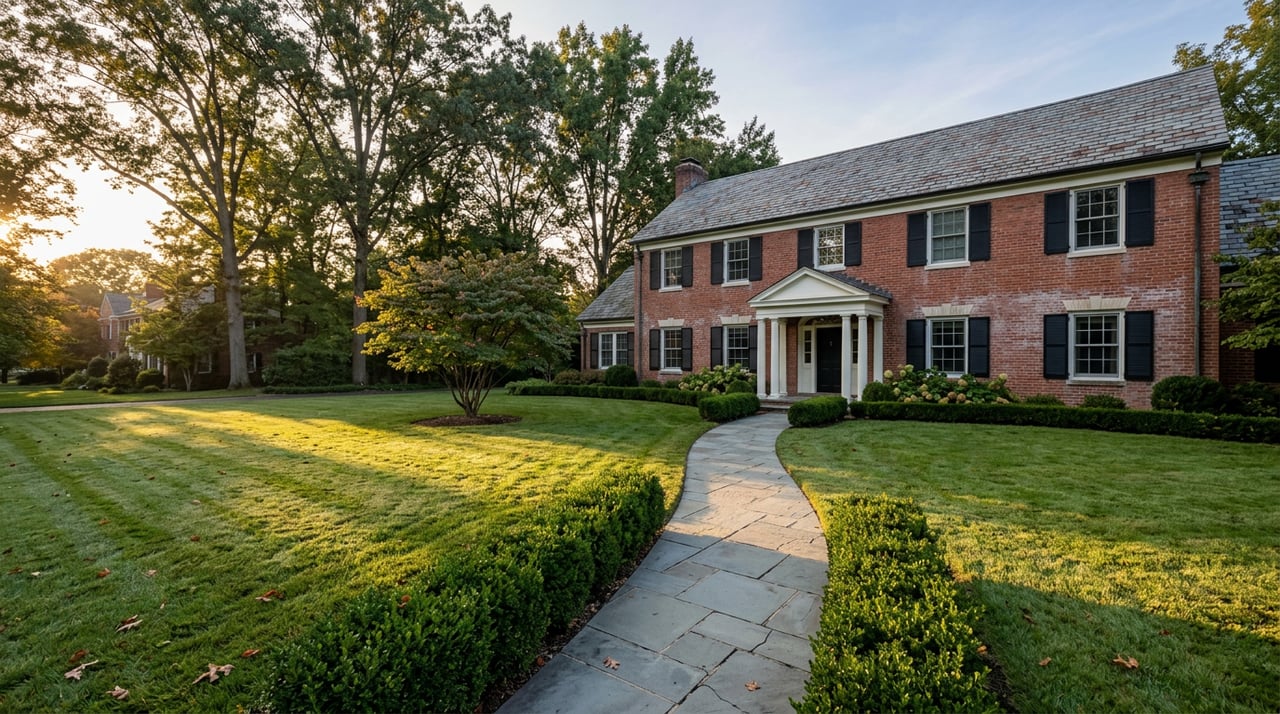
Indian Hills reads on a listing sheet like a single, tidy neighborhood: mature trees, Colonial Revival brick, a name real estate agents drop with a certain reverence. What it actually is, legally, is a home rule-class city in Jefferson County that didn't always look like one city at all. Understanding that difference matters if you're comparing Indian Hills against a neighboring enclave, if you're planning a renovation that needs a permit, or if you just want to know why your tax bill has a line item that a house two miles away doesn't.
One Address, Four Old Cities
In 1999, Indian Hills was reincorporated after a vote that merged the original city with three neighbors that had been operating as their own separate municipalities for decades. Here's what those four looked like before the merger:
| Former City | Incorporated | Status Today |
|---|---|---|
| Indian Hills | Predates the 1999 merger | Anchor city of the current municipality |
| Indian Hills-Cherokee Section | 1955 | Still listed as a separate, active city by the Kentucky Secretary of State |
| Robinswood | 1965 | Still listed as a separate, active city by the Kentucky Secretary of State |
| Winding Falls | 1977 | Still listed as a separate, active city by the Kentucky Secretary of State |
That last column is the part most homeowners never learn. Even though these four cities function as one municipal government with one police force and one set of ordinances, the state's own corporate records still carry Indian Hills-Cherokee Section, Robinswood, and Winding Falls as distinct legal entities. It's an administrative leftover, not a governance problem, but it's exactly the kind of detail that surfaces in a title search on an older property and makes a buyer's attorney pause to explain something that sounds more alarming than it is.
Why the 1999 Merger Happened at All
The push for consolidation wasn't new. Louisville tried to annex Indian Hills back in 1954 to extend sewer service into the area, and the reaction was fierce enough that no one could be found in Indian Hills willing to support it. That fight got folded into a larger 1956 push, the Mallon Plan, to bring most of Louisville's outlying suburbs into the city proper. Louisville voters approved it by a wide margin. The suburbs, including Indian Hills, rejected it by roughly two to one, and the plan was shelved.
That episode set the tone for the next several decades: Indian Hills preferred to run its own zoning, its own police, and its own tax rolls rather than merge into something bigger. By 1999, with Louisville and Jefferson County moving toward a single metro government, the four small cities decided it made more sense to combine with each other than to risk losing local control altogether. The merger crossed the population threshold needed for 4th-class city status, which gave Indian Hills stronger zoning authority and let it combine two separate police departments into one, according to Wikipedia. Rolling Fields, a neighboring city, was invited to join the 1999 merger and declined, choosing to stay independent while still sharing police coverage with Indian Hills today.
The Tax Line Your Closing Statement Won't Explain
Kentucky charges no city-level sales tax in Indian Hills. The combined rate residents pay is the state's 6 percent, with nothing added on top locally. That's the easy part.
Property tax works differently. Indian Hills sets its own ad valorem tax rate every fiscal year based on the Jefferson County Property Valuation Administrator's assessment, and that rate is levied separately from your county and Louisville Metro tax bills. The city's published tax ordinances also spell out the billing mechanics: homeowners who pay early typically receive a discount, while late payment triggers a penalty plus monthly interest until it's settled. None of this is unusual for a Kentucky home rule city, but it does mean an Indian Hills property tax bill has a line that a similarly priced home just outside city limits won't carry. If you want to see how the city structures this, the City of Indian Hills publishes its tax ordinances directly, and questions about a specific bill go to City Clerk Donna Sinkhorn's office rather than the county.
One Police Department, Two Cities
The Indian Hills Police Department is the primary law enforcement agency for both the City of Indian Hills and the City of Rolling Fields, providing round-the-clock coverage, traffic enforcement, and investigations for both. If you're weighing Indian Hills against Rolling Fields as a buyer, this is worth knowing: you're not choosing between two unrelated public safety setups. You're choosing between two cities that already share one. The department's coverage and contact information are listed on the City of Indian Hills' police page.
Where This Surfaces at the Closing Table
None of this changes what you're buying. It changes who you call once you own it.
- Building permits and code enforcement run through the city's Public Works Director, Gerard Ackermann, as the City of Indian Hills' contact page states. If you're planning an addition, a pool, or exterior work on an architecturally significant home, that's your first call.
- Tax bill questions go to City Clerk Donna Sinkhorn's office. If a bill looks unfamiliar because it's the first one you've received as a new Indian Hills owner, this is the number to have.
- Older deed language referencing Winding Falls, Robinswood, or Indian Hills-Cherokee Section. It's a record of which pre-1999 city originally platted the land. A title company will typically flag it and explain it.
- Police and emergency service questions apply the same whether the home sits in what was historically Indian Hills or one of the three merged cities, since coverage is unified today.
The practical upshot is that "Indian Hills" on a listing is shorthand for a place with more layered governance than its curb appeal suggests. That's not a warning. It's context that helps a buyer ask sharper questions before they're three weeks into a renovation permit and wondering why the county isn't the office picking up the phone.
Quick Questions
Does Indian Hills have its own police department? Yes. The Indian Hills Police Department provides coverage for both the City of Indian Hills and the neighboring City of Rolling Fields, handling calls for service, traffic enforcement, and investigations for both.
Will I pay a separate city tax bill if I buy in Indian Hills? Yes. Indian Hills levies its own ad valorem property tax each fiscal year on top of Jefferson County and Louisville Metro taxes, following an ordinance the city publishes annually. There is no separate city sales tax.
What if my deed references Robinswood or Winding Falls instead of Indian Hills? That reflects the property's history in one of the three cities that merged with Indian Hills in 1999. The Kentucky Secretary of State still lists those cities as separate active entities on paper, but they function today as part of the single City of Indian Hills.
If you're comparing Indian Hills against Rolling Fields, Glenview, or another East End enclave and want to understand how these governance details actually affect your timeline, your permits, or your tax planning, the Mac Barlow team can walk through what applies to a specific address before you write an offer.
This article is general information, not legal, tax or financial advice. Consult a qualified professional about your situation.