"AN ORDINANCE REGULATING SIGNS IN THE CITY OF GLENVIEW."
That's the actual title of Ordinance No. 1, Series 2020, sitting in the ordinance archive on the City of Glenview's own website. It sounds like a small thing, a rule about how big a real estate sign can be at the end of a driveway. But the ordinance number matters more than the subject. Glenview passes its own laws. It has its own budget, its own annual tax levy, its own short-term rental rules from 2018. It is a city, not a subdivision name, and that fact changes who a buyer or renovator actually needs to call before touching the exterior of a house there.
Most people who tour a Glenview estate assume they're dealing with one government: Louisville Metro. They're often dealing with two, and the split doesn't fall where the "historic district" label suggests it does.
How Glenview ended up governing itself
Glenview's estate homes sit on bluffs above the Ohio River, on land that traces back to a horse farm James C. McFerran opened in 1868. The neighborhood took its current legal shape more recently. In 1983, Louisville attempted to annex the area. Residents pushed back, and in 1985 they incorporated Glenview as a sixth-class city under Kentucky law, a formal status that comes with the authority to pass ordinances, levy its own ad valorem tax, and set its own zoning and permitting rules, according to the city's own history page.
That incorporation is why a Glenview closing statement carries a city tax line that a comparable home in unincorporated Jefferson County wouldn't have. It's also why a fence, a pool, or an addition in Glenview goes through the City of Glenview's process rather than Louisville Metro's Office of Planning and Design Services, the department that reviews most exterior projects elsewhere in Jefferson County.
Emergency services didn't follow the same split. Glenview's own service page lists Louisville Metro Police as its police coverage and the Harrods Creek Fire Department for fire response, both regional providers rather than city departments. Incorporation gave Glenview control over land use, taxation, and municipal ordinances. It didn't give the city its own patrol cars or fire trucks, and it doesn't need to.
The historic label that doesn't do what people expect
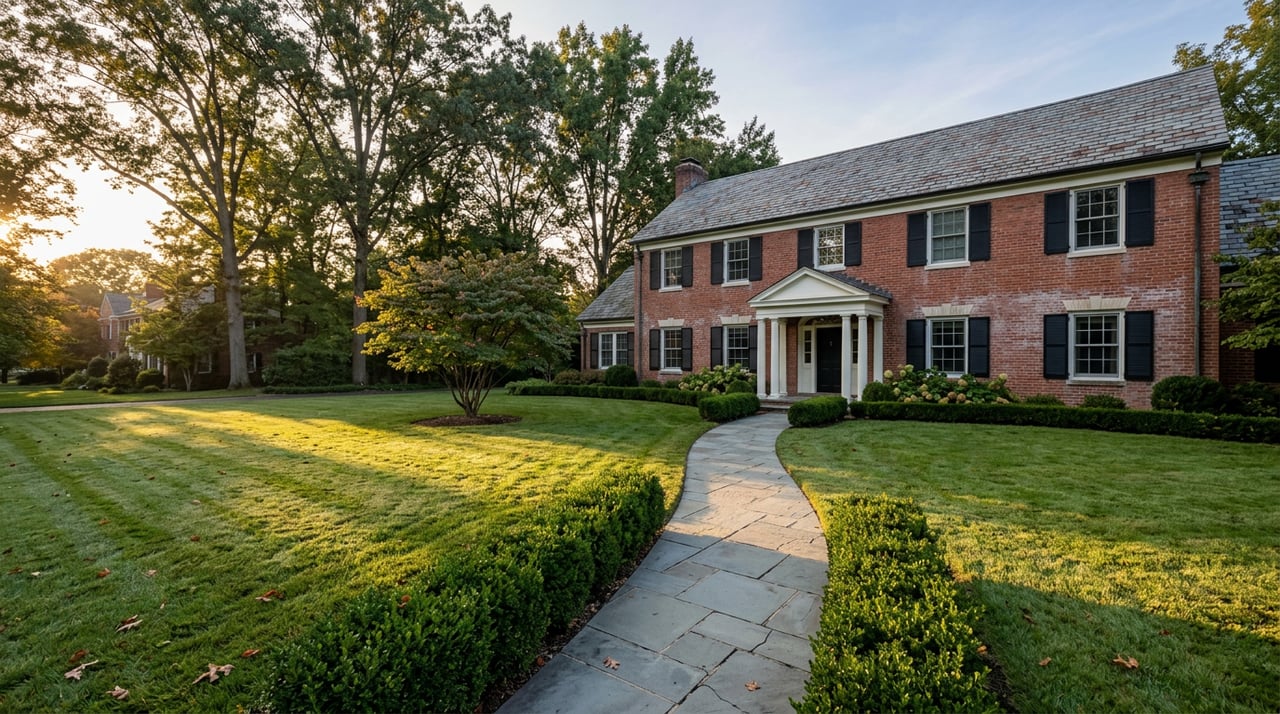
Glenview carries real historic weight. Several of its residences were added to the National Register of Historic Places when Jefferson County established the Glenview Historic District in the mid-1980s, with homes designed by local architects including John Bacon Hutchings and the firm of Nevin and Morgan. A separate "country estates historic district" nomination followed in 1999, recognizing properties tied to families like the Binghams, Belknaps, and Ballards who built along the river bluffs after the Fincastle Club era ended.
That's a genuinely rare pedigree for a Louisville neighborhood. It's also easy to misread, because Louisville has a completely different kind of historic designation that carries real teeth: the seven locally-designated Historic Preservation Districts that Louisville Metro's Historic Landmarks and Preservation Districts Commission actually regulates. Butchertown, Cherokee Triangle, Clifton, Limerick, Old Louisville, Parkland, and West Main Street all require a Certificate of Appropriateness before any exterior alteration, addition, or demolition. Glenview is not on that list.
The distinction is a federal-versus-local one. National Register status, which is what Glenview's estate homes hold, is administered by the Kentucky Heritage Council and comes with real financial upside: owners of listed properties can qualify for state and federal rehabilitation tax credits when work meets the Secretary of the Interior's standards. What it doesn't come with is a design review board that has to approve your window choices or your paint color. That authority only attaches to Louisville Metro's seven local districts, and Glenview isn't one of them.
So a buyer who assumes a "historic Glenview" listing means facing the same Architectural Review Committee process that governs a Cherokee Triangle bungalow is planning around a rule that doesn't apply to them. The rule that does apply runs through a much smaller office: Glenview's own city government.
Where the confusion actually costs time
This isn't a theoretical mix-up. It shows up in the sequence of who gets called first.
A homeowner planning a renovation who starts by contacting Louisville Metro's Office of Planning, expecting a Certificate of Appropriateness process because the property sits in a National Register district, will find that Metro's design review simply doesn't have jurisdiction here. The permit and any zoning question routes to the City of Glenview instead, under whatever ordinances the city currently has on the books, including the sign regulations and the 2018 short-term rental ordinance that governs whether and how a property can be rented out on a short-term basis.
Meanwhile, a homeowner who wants to pursue the tax credit that National Register status makes available is on a third track entirely. That application goes to the Kentucky Heritage Council, and it has nothing to do with either Metro or the city. Three different processes, three different offices, one property.
None of this is unusual by national standards. Plenty of small incorporated cities sit inside larger metro counties with their own permitting authority. What makes it worth flagging for Glenview specifically is that the historic marketing language, which is accurate and worth highlighting, tends to pull a buyer's expectations toward the wrong government.
What this means if you're buying, selling, or renovating
A few practical points worth confirming before signing a contract or hiring a contractor in Glenview:
- Confirm which specific residences carry the National Register designation. Not every property inside Glenview's boundaries was part of the 1980s or 1999 listings, and the tax credit eligibility only applies to those that were.
- Direct any exterior renovation question to the City of Glenview first, not Louisville Metro's Landmarks Commission. Metro's Certificate of Appropriateness process doesn't reach Glenview because the city isn't one of the seven local preservation districts.
- If the goal is a Kentucky Historic Preservation Tax Credit, that application runs through the Kentucky Heritage Council and follows the Secretary of the Interior's rehabilitation standards, independent of any city permit.
- Expect a city ad valorem tax line specific to Glenview on top of county and school district taxes, a direct result of the 1985 incorporation.
- If short-term rental income is part of the plan, check the city's 2018 ordinance before assuming county or Metro rules apply.
- Many of Glenview's estate homes predate 1978. Kentucky's standard seller disclosure form covers structural, plumbing, electrical, and system conditions, and federal law separately requires a lead-based paint disclosure for any home built before 1978, a detail worth confirming early rather than at inspection.
None of this changes what makes Glenview worth the search. It changes which office picks up the phone.
A few quick questions
Does a "historic Glenview" listing mean I need city approval to change windows or repaint the exterior? Not automatically. National Register status doesn't trigger Louisville Metro's design review, since Glenview isn't one of the seven locally-designated Preservation Districts. Whether the City of Glenview has its own review requirement for a specific project is worth confirming directly with the city, since that authority sits with them, not with Metro's Landmarks Commission.
Who provides police and fire service if Glenview has its own government? Louisville Metro Police covers Glenview, and the Harrods Creek Fire Department handles fire response, according to the city's own services page. Incorporation gave Glenview control over zoning, permitting, and taxation. It didn't replace regional emergency service providers.
If a home is on the National Register, does that automatically qualify a renovation for a tax credit? No. The property has to be part of the specific National Register listing, and the rehabilitation work has to meet the Secretary of the Interior's standards as certified by the Kentucky Heritage Council. It's a separate application from any city permit.
Is the Glenview city tax the only additional line beyond county tax? Glenview's incorporation gives the city its own annual ad valorem tax levy, set by ordinance each fiscal year. Buyers comparing a Glenview estate to a similarly priced home outside city limits should expect that line to differ and worth confirming with the current year's city budget ordinance.
If you're weighing a Glenview property, whether it's one with National Register standing or one of the newer builds along the same bluffs, Stough Barlow Team can walk through which permitting track actually applies to that specific address before you're mid-renovation and discovering it the hard way.