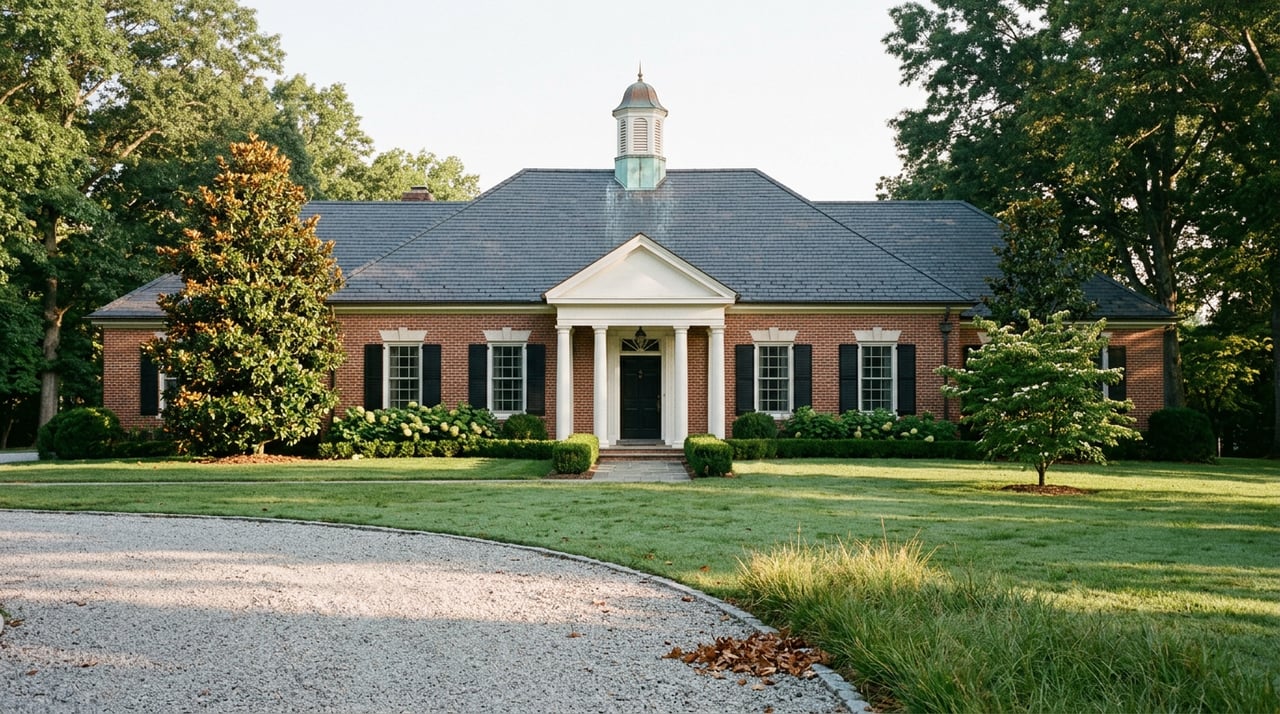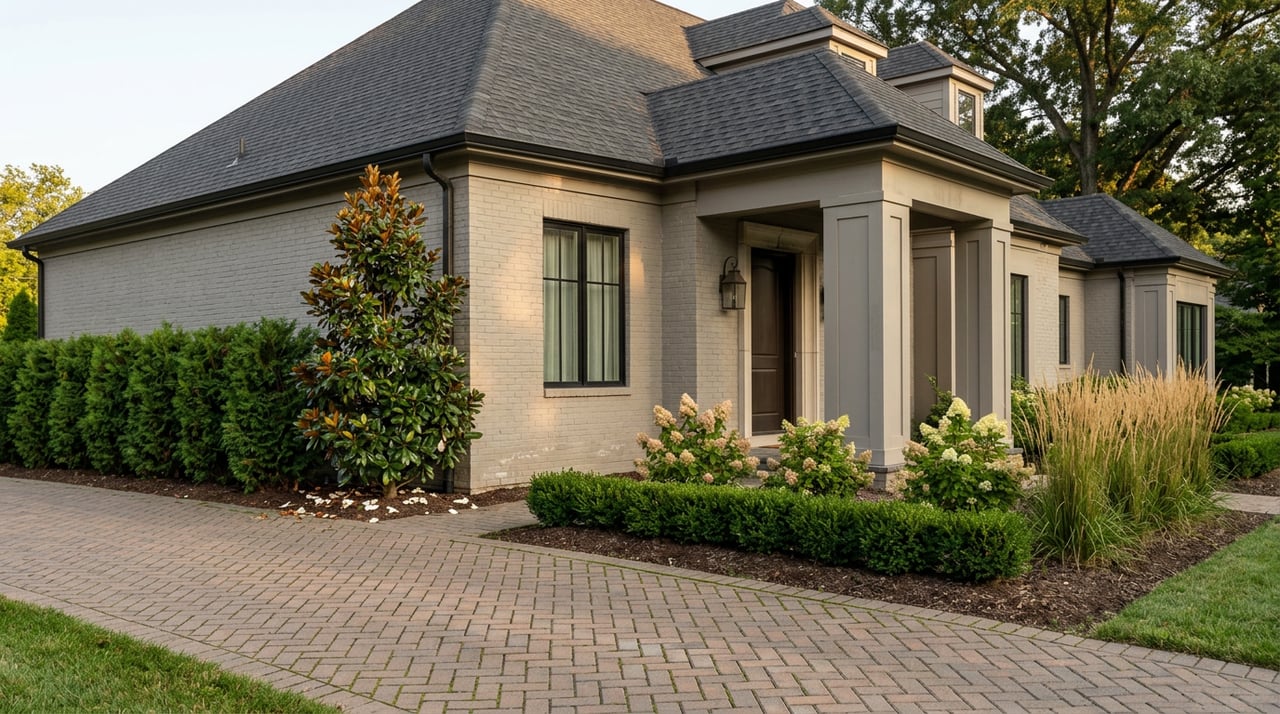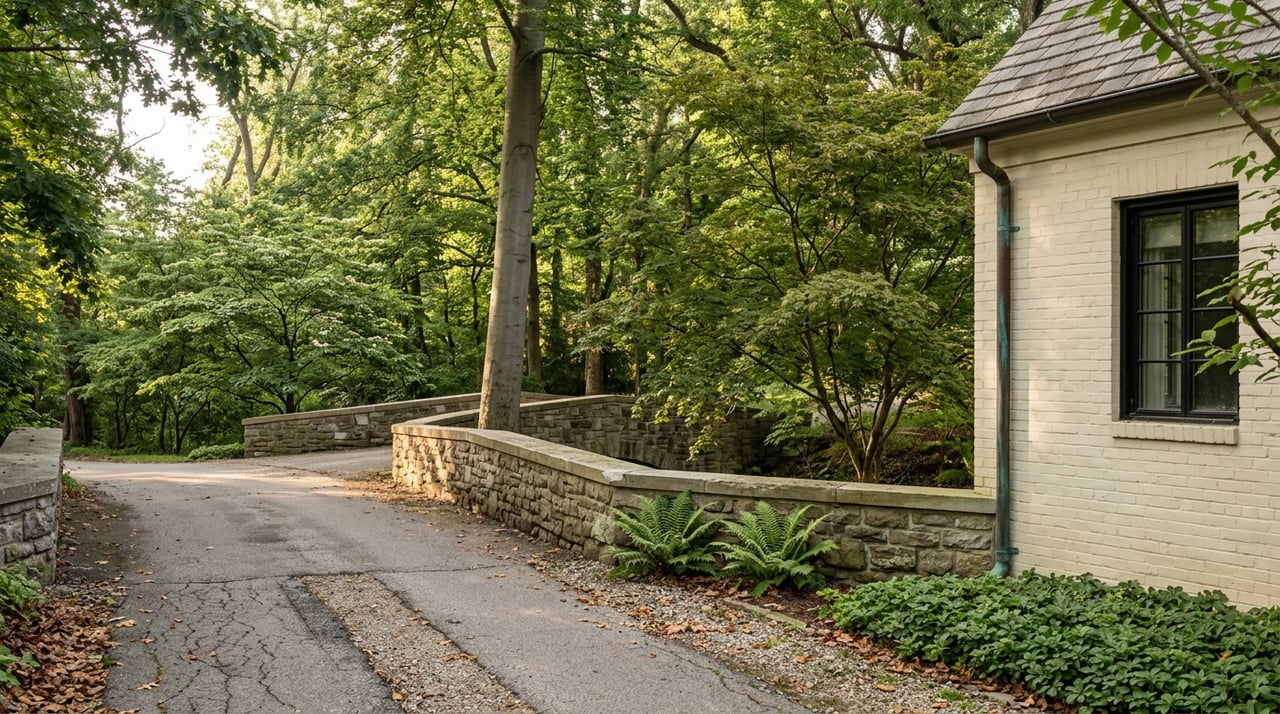
What would you guess separates a 1953 ranch on Rolling Lane from a 1952 ranch on Country Lane, both inside the same small Louisville subdivision, both on generous lots, both built within a year of each other? Not much, on paper. And yet one recently carried an estimated value of roughly $403 a square foot. The other sat closer to $319. That's an $80-plus gap per square foot between homes that a county tax map would treat as peers.
If you're comparing Rolling Fields to other East End neighborhoods, that gap is the number worth understanding, not the median. The median tells you what a typical home costs. It doesn't tell you why two nearly identical houses a few streets apart land so far from each other, and it won't tell you which one you're actually buying into when you make an offer here.
The Two Houses That Shouldn't Price This Differently
Start with the specifics, because they make the case better than any summary could. The Rolling Lane home offers 3,269 square feet on a 19,746 square foot lot, built in 1953, with an estimated value near $1,319,000. The Country Lane home is smaller at 2,079 square feet on a 14,985 square foot lot, built the year before, valued closer to $664,000. Scale the smaller one up by square footage and it still doesn't close the gap. Something other than size and age is doing the pricing here.
Rolling Fields is a tiny, self-governed subdivision of mid-century Colonial Revival and ranch homes, most built in the 1940s and 1950s on winding streets that were laid out to follow the natural terrain rather than a grid. That consistency is part of the appeal. It's also exactly why a straightforward comparison between two of its homes should produce a much smaller spread than $80 a square foot. When the housing stock is this uniform in age and style, price separation has to come from somewhere else.
What the Median Actually Hides
A local guide to the neighborhood puts the typical price at roughly $738,000, with homes ranging from $480,000 up to $1.4 million. Condo options in the neighborhood run from $130,000 to $314,000. Notice how wide that single-family range is relative to how small the subdivision is. This isn't a spread between a struggling pocket and a premium pocket the way you'd see across a large ZIP code. It's a spread happening inside one small, historically consistent neighborhood built from the same farmland in roughly the same fifteen-year window.
An agent quoted in that same local guide gave the plainest explanation available:
People spend hundreds of thousands of dollars on renovations and additions in order to stay in the popular location.
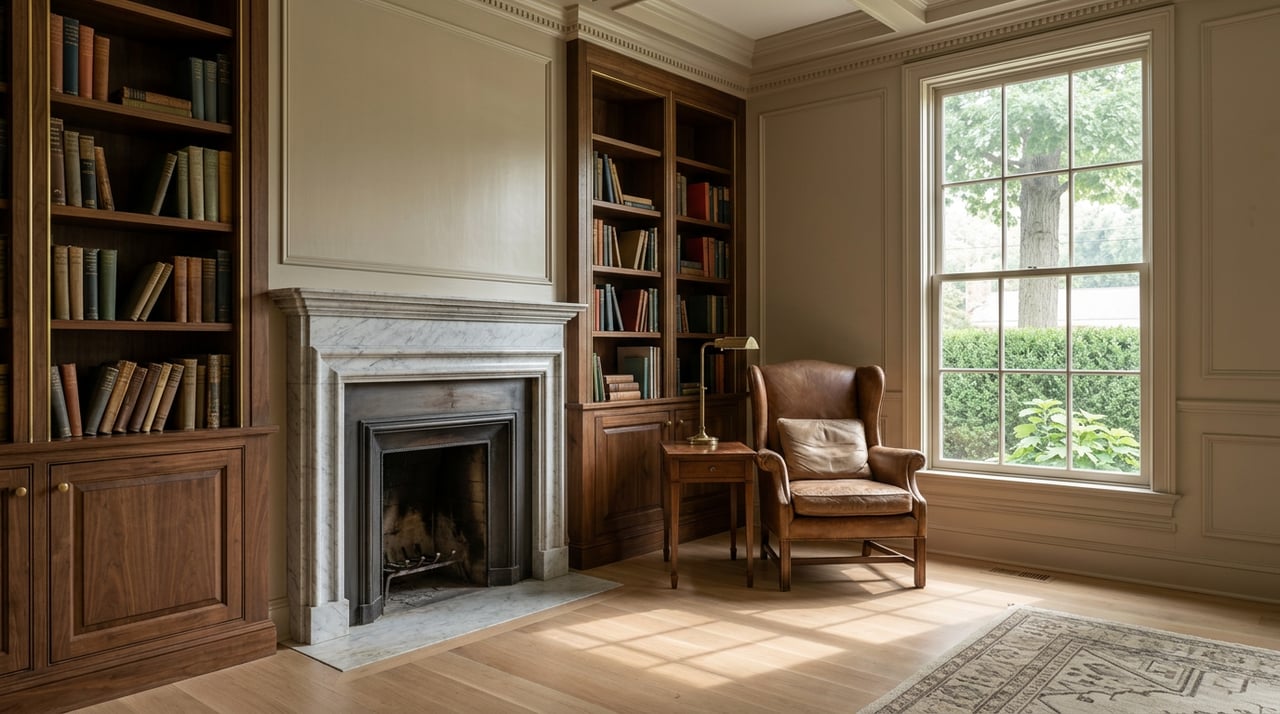
That single sentence reframes the whole comparison. The price difference between the Rolling Lane and Country Lane homes isn't really about square footage or lot size. It's about which owner already wrote the check for a new kitchen, an addition, updated systems, and which one didn't. Buyers aren't just pricing brick and lot lines in Rolling Fields. They're pricing someone else's renovation decisions, made years before the listing ever existed.
Why There's Nothing to Compare It To Right Now
Here's the part that changes how you should shop this neighborhood. As of this summer, standard listing search tools showed zero active listings in Rolling Fields. None. That matters more than it sounds like it should, because it means there is no live competitive set to price against. An appraiser, a lender, and a buyer's agent working a Rolling Fields offer this year are pulling from closed sales history, not from a shelf of comparable homes currently for sale down the street.
That has a practical consequence. In a neighborhood with active inventory, a buyer can look at three or four competing listings and triangulate a fair number. In Rolling Fields right now, you're largely negotiating against a home that already sold, sometimes months ago, and whose renovation history you may not fully know unless your agent digs into it. As of mid-August 2026, an individual property valuation pulled from an automated model showed the broader 40207 ZIP code's median list price down roughly 4 percent year over year, a reminder that even the surrounding benchmark is moving while the subdivision itself has almost nothing on the market to test that number against.
Put together, the picture is a neighborhood where price discovery happens almost entirely through renovation-adjusted closed comps rather than through watching competing listings duke it out. That is a very different negotiating posture than most buyers are used to walking into.
The 100-Acre Farm That Explains the Governance Too
Rolling Fields traces back to a single 100-acre family farm, land from which also became Indian Hills and the Louisville Country Club next door. That shared root is why the corridor feels so cohesive today, three small, distinct communities grown from one piece of ground.
It also explains something buyers often assume is true and isn't. Rolling Fields is its own incorporated city, with its own mayor and its own local governance, separate from the Louisville Metro government that runs most of the surrounding area. When Indian Hills reorganized in 1999 and merged with its neighboring cities of Indian Hills-Cherokee Section, Robinswood, and Winding Falls, Rolling Fields was approached about joining that merger and chose to stay independent.
That decision means renovation and zoning questions in Rolling Fields route through a small, local city government rather than a larger county planning apparatus. For a buyer weighing an addition or a full renovation, that's not a footnote. It shapes how quickly and predictably a project can move, which in turn shapes how confidently a seller can price in the renovation premium the neighborhood clearly rewards.
What This Means If You're Comparing Rolling Fields to Somewhere Else
If you're cross-shopping Rolling Fields against Indian Hills, St. Matthews, or Crescent Hill, treat the price range less like a menu and more like a signal:
- Ask for the renovation history on any comp your agent pulls, not just the sale price. A $1.3 million closed sale and a $660,000 closed sale two streets apart are telling you about capital already spent, not about the neighborhood's ceiling and floor.
- Don't expect a shelf of active listings to shop against. With inventory this thin, your agent needs to build the comp set from closed sales and off-market conversations, not from what happens to be live on a portal that week.
- Budget for renovation as part of your total cost, not as an optional upgrade. The neighborhood's own pricing pattern shows that homes here are valued in part on what's already been done to them, which means an unrenovated home at a lower price point may still require the same spend the higher-priced comp already absorbed.
- If what you actually want is the lifestyle, not necessarily the renovation premium, look at what draws people here in the first place: Thurman Hutchins Park's fishing and 1.5-mile loop trail, the river views at Carrie Gaulbert Cox Park, the Friday in the Fields food truck nights at the neighborhood's own community park, and the annual Independence Day parade and Halloween Pizza Party that keep the calendar full. Those amenities exist in Rolling Fields, but similar versions may be reachable at a different price point in the immediately adjacent neighborhoods that share the same 100-acre history.
A Few Quick Questions
Why are there no active listings in Rolling Fields right now? The subdivision is small and homes tend to be held long-term or passed down, so turnover is naturally low. A zero-listing snapshot reflects that scarcity rather than a lack of interest in the area.
Does the wide price range mean parts of Rolling Fields are less desirable? Not based on what the data shows. The spread lines up with renovation investment and lot specifics far more than with location within the subdivision itself.
Is Rolling Fields still governed separately from Louisville Metro? Yes. It remains its own home-rule city with its own mayor, and it stayed independent even when the neighboring Indian Hills area reorganized and merged with several smaller surrounding cities in 1999.
If you're trying to figure out what a Rolling Fields number is actually pricing, or you want a second opinion on a comp before you write an offer, the Stough Barlow Team has spent years reading exactly these kinds of Louisville neighborhoods block by block. Contact Us to talk through what a specific Rolling Fields address is really telling you.